
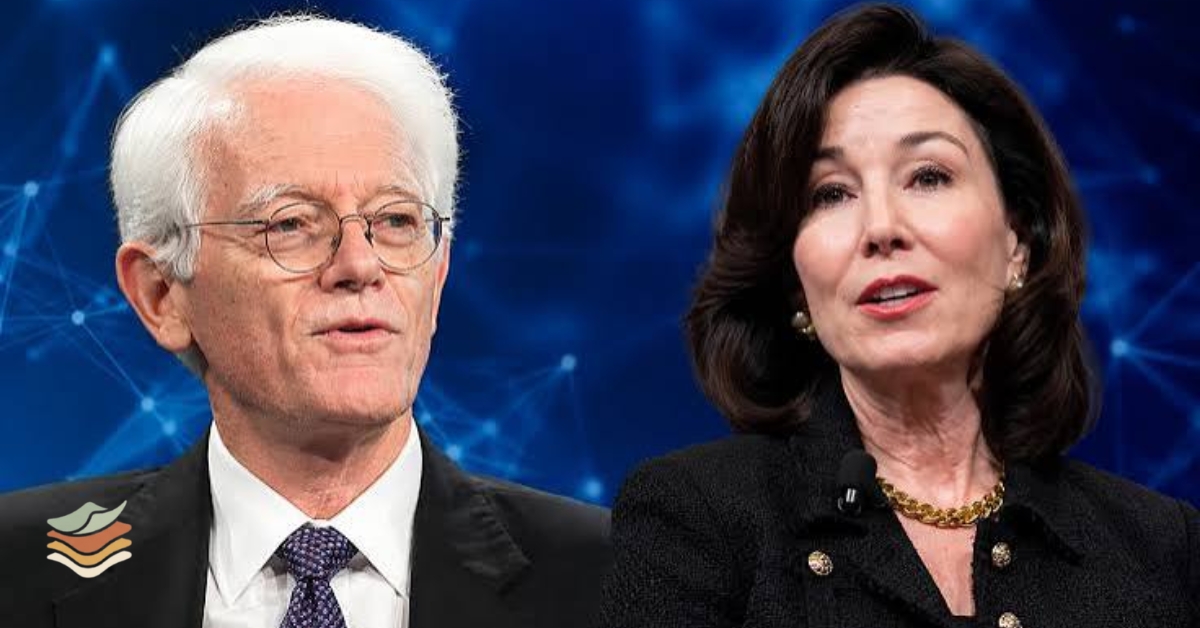

Peter Lynch and Safra Catz share one clear connection: both are Wharton alumni who became leaders in finance-minded careers, yet they never worked together or shared a classroom. Lynch earned his Wharton MBA in 1968 and later managed the Fidelity Magellan Fund, while Catz completed her Wharton undergraduate degree in 1983 before building a career in investment banking and enterprise technology at Oracle. Their paths show two ways to apply financial analysis: Lynch studied companies from the outside through stock research, and Catz shaped one from the inside through acquisitions and corporate strategy. Together, they illustrate disciplined capital allocation in practice, and the difference between judging value and creating it.
What Connects Safra Catz and Peter Lynch?
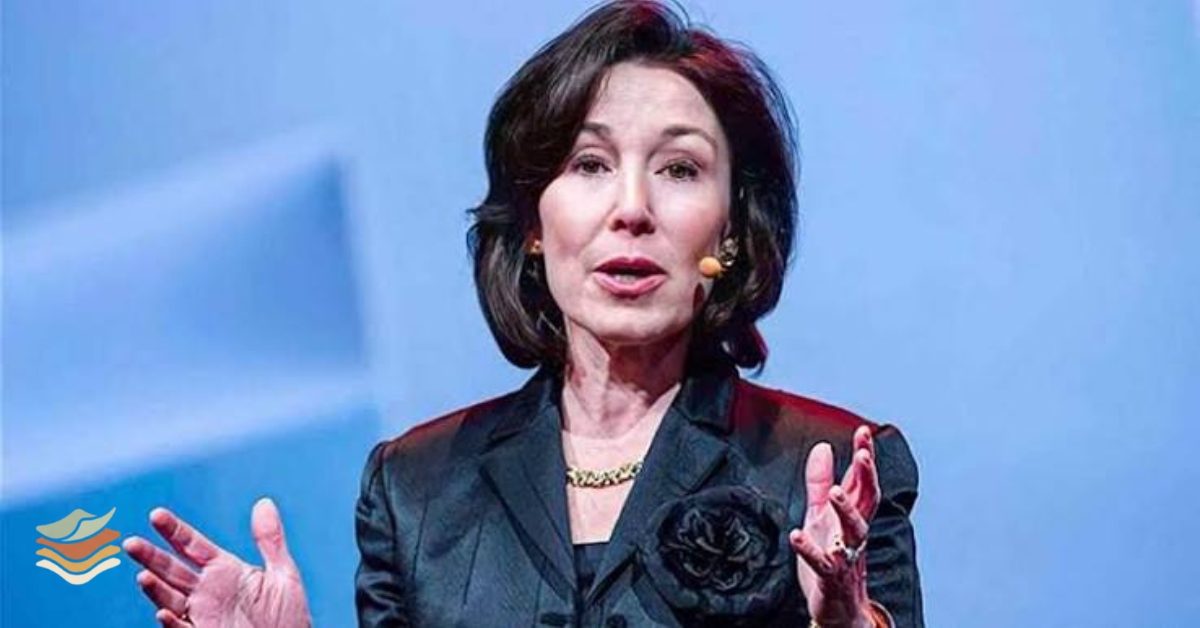
The Safra Catz and Peter Lynch connection comes down to education and mindset, not a working relationship. Both studied at the Wharton School, the business school of the University of Pennsylvania, and both built careers on financial decision-making. Beyond that, no public record shows a partnership, a shared board seat, or a formal mentorship.
The Safra Catz and Peter Lynch relationship is best described as a parallel one:
- Shared school: Both are Wharton alumni.
- Shared discipline: Both relied on valuation, earnings analysis, and long-term value rather than short-term noise.
- Different arenas: Lynch worked in investment management. Catz worked in corporate leadership and enterprise technology.
The Safra Catz and Peter Lynch Wharton connection is also separated by time. Lynch belongs to the Wharton Class of 1968, and Catz to the Wharton Class of 1983. Neither earned a degree at the Stanford Graduate School of Business, so the University of Pennsylvania is the only academic thread linking them.
Quick Facts
| Fact | Safra Catz | Peter Lynch |
| Primary field | Corporate leadership and enterprise technology | Investment management |
| Best known for | Leading Oracle as CEO from 2014 to 2025 | Managing Fidelity’s Magellan Fund from 1977 to 1990 |
| Wharton education | Undergraduate degree, Class of 1983 | MBA, Class of 1968 |
| Other education | University of Pennsylvania law degree, 1986 | Boston College degree, 1965 |
| Signature expertise | Financial operations, acquisitions and corporate strategy | Stock research and active portfolio management |
| Later role | Executive vice chair of Oracle | Vice chairman of Fidelity Management & Research and philanthropist |
Safra Catz: From Investment Banking to Oracle
Safra Catz started her career in investment banking. After earning her Wharton undergraduate degree and her University of Pennsylvania law degree in 1986, she joined Donaldson, Lufkin & Jenrette (DLJ), a Wall Street investment bank. She rose to managing director and focused on technology clients. That work gave her direct exposure to corporate transactions, valuation, and the economics of software companies.
In 1999, she moved to Oracle, one of the world’s largest providers of business software and database technology. She joined as a senior vice president, and her path from there was steady:
- 1999: Joined Oracle as a senior vice president after years advising technology firms.
- 2001: Joined the board of directors while continuing to lead financial and deal work.
- 2004: Became president, during the period when Oracle pursued PeopleSoft, a rival maker of enterprise applications.
- Later years: Served as chief financial officer and worked closely with Larry Ellison, Oracle’s founder and chairman.
- September 2014: Became Oracle co-CEO alongside Mark Hurd, the former Hewlett-Packard chief, when Ellison stepped down as CEO.
Fifteen years passed between her arrival at Oracle and her promotion to the top job. That timeline explains her reputation: she was known for financial operations, tight cost control, and acquisitions that folded new products into Oracle’s existing business. The PeopleSoft deal is the best-known example. After Hurd’s death, she held the Oracle CEO role on her own until her later move to Oracle executive vice chair.
In September 2025, Clay Magouyrk and Mike Sicilia were named Oracle co-CEOs, and Catz became executive vice chair. Magouyrk led Oracle’s cloud infrastructure business, and Sicilia led its industry and applications business. The change reflected Oracle’s shift toward cloud infrastructure, where it now competes as a major hyperscale cloud provider.
Peter Lynch: Research, Magellan and Long-Term Investing
Peter Lynch earned his Boston College degree in 1965 and completed his Wharton MBA in 1968. He had already joined Fidelity, the Boston-based investment firm, before finishing his degree, and he worked his way from research to portfolio management.
In 1977, he took over the Fidelity Magellan Fund. Over 13 years, he turned a small fund into one of the most closely watched vehicles in mutual fund history. The figures below show the scale of his record.
| Measure | Result |
| Years managing Magellan | 13 years (1977 to 1990) |
| Average annual return | 29.2% |
| Fund assets at start | Approximately $18 million |
| Fund assets at exit | $14 billion |
| Age when he stepped down | 46 |
Lynch’s method centered on stock research and active portfolio management. He visited companies, spoke with managers, and studied products in stores. He is closely associated with the idea to “invest in what you know,” and he repeated a related rule: “Know what you own, and know why you own it.”
His practical habits included:
- Checking earnings and debt before buying.
- Looking for competitive advantages that protect a business.
- Holding a diversified investment portfolio, often with hundreds of names.
- Using direct observation, such as noticing a product’s popularity, as a starting point for deeper company research.
After leaving Magellan, Lynch stayed at Fidelity as vice chairman of Fidelity Management & Research, where he continued to work with investment analysts. He also turned to philanthropy, and his honors include election to the American Academy of Arts and Sciences. He explained his approach to ordinary investors in three books: One Up on Wall Street, Beating the Street, and Learn to Earn. John Rothchild, a financial writer, co-wrote the last two.
Career Timeline
| Year | Milestone |
| 1965 | Lynch graduates from Boston College |
| 1968 | Lynch earns his MBA from Wharton |
| 1977 | Lynch begins managing the Fidelity Magellan Fund |
| 1983 | Catz completes her undergraduate studies at Wharton |
| 1986 | Catz earns her Penn law degree and begins working at DLJ |
| 1990 | Lynch steps down as Magellan’s portfolio manager |
| 1999 | Catz joins Oracle |
| 2014 | Catz becomes Oracle co-CEO |
| 2025 | Catz becomes executive vice chair of Oracle |
Two Different Approaches to Creating Value
Both leaders created value, but from opposite sides of the same company. One built value as an insider, and the other identified value as an outside analyst.
Catz worked from inside the company
Catz operated as an insider with control over how capital moved. Her work involved financial operations, dealmaking, and corporate strategy, and it touched three areas:
- Acquisitions: Buying companies such as PeopleSoft to add customers and products.
- Cost discipline: Keeping margins healthy while Oracle shifted from licensed software to subscriptions.
- Capital deployment: Directing money toward cloud infrastructure and new business software offerings.
For her, disciplined capital allocation meant deciding what to buy, what to build, and what to leave alone.
Lynch evaluated companies from the outside
Lynch could not change a company’s strategy. He could only decide whether to own its shares. His edge came from company research, patience, and a clear view of business economics.
He asked whether a firm’s earnings were growing, whether its debt was manageable, and whether its price was reasonable compared with its prospects. His approach to portfolio construction was to spread risk across many holdings while giving the best ideas larger positions.
Both relied on informed judgment
| Area | Catz | Lynch |
| Position | Inside the company | Outside the company |
| Main tool | Acquisitions and corporate strategy | Stock research and valuation |
| Risk handled by | Deal structure and cost control | Diversification and price discipline |
| Return measured by | Company growth and long-term value | Fund returns for shareholders |
Frequently Asked Questions
Did Safra Catz and Peter Lynch attend Wharton together?
No. Peter Lynch earned his Wharton MBA in 1968, and Safra Catz finished her Wharton undergraduate degree in 1983, fifteen years later.
Did Peter Lynch invest in Oracle?
No public record confirms Oracle as a notable Magellan holding. Lynch favored businesses he understood firsthand, so verify any claim against historical Fidelity fund filings.
What was Safra Catz’s most important role at Oracle?
Oracle CEO, first as co-CEO alongside Mark Hurd from September 2014, then as sole chief executive, guiding the company’s acquisitions and shift toward cloud infrastructure.
What made Peter Lynch’s Magellan record exceptional?
Lynch delivered a 29.2% average annual return over 13 years, growing Magellan from approximately $18 million to $14 billion in assets.
What can business readers learn from both careers?
Understand the business before investing, study earnings and debt, allocate capital deliberately, combine financial analysis with informed judgment, and measure results over years, not quarters.
Conclusion
Peter Lynch and Safra Catz are linked mainly through the Wharton School, not a workingrelationship. Lynch earned his MBA in 1968 and Catz her undergraduate degree in 1983. Lynch managed the Fidelity Magellan Fund from 1977 to 1990, while Catz moved from investment banking to Oracle.
Lynch earned a 29.2% average annual return through stock research, growing assets from $18 million to $14 billion. Catz shaped Oracle from inside through acquisitions, financial operations, and corporate strategy, co-CEO in 2014. Lynch judged companies from outside; Catz steered one within. Both relied on informed judgment, disciplined capital allocation, and long-term value.

